WHILE the legitimacy of soil carbon projects is subject to vigorous debate between the carbon industry and scientists, more than 700 projects are now officially signed up.
From corporates to family cattle companies, producers from a widespread area across the country are giving it a go.
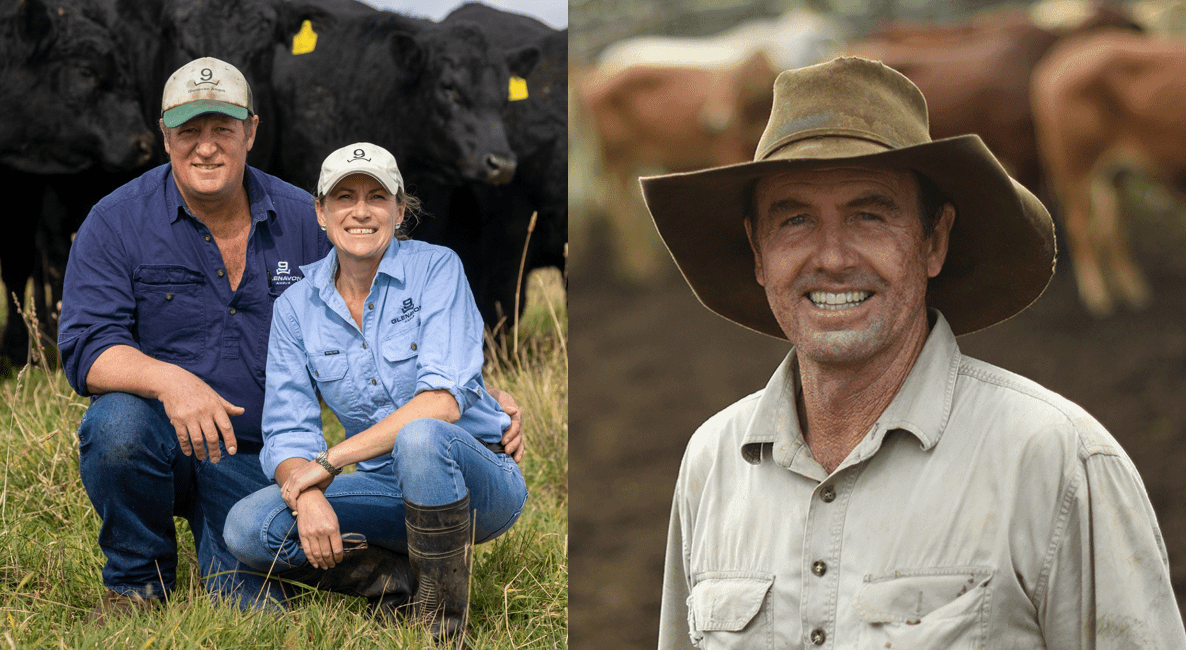
Russell Lethbridge from North Queensland-based Werrington Cattle Company, who is also on the board of Meat & Livestock Australia and Richard and Prue Post from Glenavon Angus at Guyra are two of those producers.
Beef Central recently spoke to the pair to find out why they are signing up, what is involved and what they hope to achieve.
Werrington Cattle Co is in the early stages of signing up to the program, with the baseline soil samples already taken they are now waiting to hear back from the Clean Energy Regulator.
Soil samples have been taken across 10,000ha on the family’s Rainmore Station, near Alpha, in Central Queensland.
Once the project is signed up, the Lethbridge family plans to plant Desmanthus and Stylo legumes into the buffel pastures, increase grazing density and extend rest periods.
 “They are two changes of practices that we were wanting to do on our property anyway,” Mr Lethbridge said.
“But it made sense to include the carbon project in the mix because I am of the opinion that we are all going to have to know our emissions and sequestration numbers down the track. And the clock is counting down on big companies having to report on scope 3 emissions.”
Having worked closely with the RCS network since the late 1990s, the Lethbridge family had been led into the project by RCS subsidiary Carbon Link.
“You need to develop a relationship which has trust both ways, they have been part of the soil carbon space since the start and they were able to lead us through the project,” Mr Lethbridge said.
The property is in the brigalow belt of Central Qld, on the eastern side of the Great Dividing Range, but west of a lot of other stations that have already signed up for soil carbon projects.
Mr Lethbridge said Rainmore had a lower average rainfall than most of the other properties signed up, however, he was confident it could increase soil carbon and ultimately productivity.
“We will be focused on retaining more water on our property. The amount of water that soil with a lot of soil organic carbon can hold is huge compared to the soil with lesser carbon,” he said.
“NAP Co has been doing a lot of this work at Cungelella Station and they have really been the leader with developing these methods of getting diversity into pastures.
“Adding pasture diversity is bit of a risk mitigation and I am hoping it shields us from things like pasture dieback if we ever get it in the future. So, there are a lot of win-wins here.”
Richard and Prue Post
The Post family are further into the soil carbon journey than the Lethbridge’s, having signed up in 2022 and nearing their second round of soil tests to see if there has been an increase in carbon.
The family had just come out of the 2019 drought, the worst on record for the New England and had also purchased multiple properties adjacent to the home farm.
“We were always going to have a lot of capital expenditure to renovate and improve the carrying capacity of the farms we had bought,” Mr Post said.
“Very specific to us was our situation where we were sitting on a place that was very high in soil carbon and highly productive and we had acquired properties that had low production and were tested to be very low in soil carbon.”
Having been involved in financial markets before running Glenavon, Mr Post said he had watched closely the development of carbon markets. He said the first step was getting comfortable with the soil carbon framework.
“The information on the Clean Energy Regulator’s website is first class for a government department. So, the easy part for me was getting comfortable with the framework, legislation change and regulatory risk,” he said.
The family runs the project themselves working closely with Armidale-based Precision Pastures. Mr Post said they had done a “carbon starter report” with Precision Pastures looking at their starting point and what might be achievable over 25-years – which he said made lot things line up.
“Of the list of eligible activities (pictured below) stipulated by the CER, we were looking at doing the bulk of the list anyway,” he said.
“We were just about to spend a lot of money on these properties, my wife and I are in our mid-40s and we were comfortable with the 25 years on our succession plan timeline. And we had just come out of the 2019 drought, so we were very open to change.
“Even if it didn’t come to anything, we thought we were better off being inside the carbon tent than outside it.”
More data to come light
Mr Post said he had not budgeted on gaining income from ACCUs, however, he was optimistic about increasing soil carbon.
“I am not budgeting anything financially for the project because I am naturally conservative. But I am optimistic that we will show some improvement in soil carbon because we know that we are already lifting our production and we know that is somewhat consistent with soil carbon,” he said.
“I am well aware that most re-tests in soil carbon have shown modest change, and some have even shown no change.
“We don’t have enough data on what those projects that are successful are doing differently to everyone else. But we will know a lot of that in the next 5-10 years as a large chunk of the projects in NSW, like ourselves, approach their first re-test.”
Other notable projects
Having recently trawled through the Australian Carbon Credit Unit register, Beef Central has found several other interesting projects that are signed up.
The Australian Agricultural Company has officially signed up a project at Glentana Station near Springsure in Central Qld. Several other projects are signed up in this area.
AA Co briefly mentioned the project in its annual report, however it said because meaningful changes in soil carbon take time, it was expecting more detail in future reporting cycles.
One producer in amore arid part of Qld has signed up, with plans to make longer term commitments to spelling and increasing grazing densities.
Flux tower research conducted by Agrimix has also resulted in some projects being signed up, including Essex Station in Central Qld.